Authorization integrity
Research examines whether authorization remains clear, current and attributable throughout autonomous operation.
An independent research initiative of Florida Keys Life
As autonomous AI moves from recommendation to consequential execution, accountability depends on more than model behavior. It requires a clear distinction between what a system can do and what it is authorized to do.
Independent research from the Florida Keys, USA
01 / The technical problem
Autonomous AI systems can act across tools, workflows and changing operating conditions. In consequential settings, the central governance question is not only whether an AI system can perform an action, but whether that action remains authorized, accountable and appropriate at the moment it is taken.
The research examines how human authority can remain operationally meaningful when permissions, context and risk conditions change during autonomous activity. It also considers how oversight can be made assessable rather than treated only as a policy statement or interface feature.
02 / Research focus
This initiative investigates governance questions that arise when AI systems are permitted to initiate or carry out consequential actions with reduced direct human involvement.
Research examines whether authorization remains clear, current and attributable throughout autonomous operation.
Research investigates how human oversight can remain effective as permissions, circumstances and operating context change.
Research considers how responsibility and review can remain connected to actions taken by increasingly autonomous systems.
Research is intended to support safeguards that can be examined and evaluated in civilian autonomous-system settings.
Research examines the relationship between high-level governance commitments and controls that shape real-world AI actions.
03 / Research and evaluation
The research focuses on developing assessable safeguards for human oversight and authorization integrity. This public overview does not report independently validated performance or deployment outcomes.
Future public reporting, if any, should distinguish research hypotheses, internal engineering evaluation and independently validated evidence.
04 / Global digital cooperation
The research goals align with Objective 5 of the Global Digital Compact, including paragraph 55(d), concerning transparency, accountability and robust human oversight of AI systems.
The initiative is intended to contribute practical research to the broader question of how human oversight and accountability can remain meaningful as autonomous AI systems become more capable of consequential execution.
This is an independent initiative. Reference to the Global Digital Compact does not imply United Nations affiliation, approval or endorsement.
Read the Global Digital Compact on the United Nations website
05 / Policy, program and AI use
This independent research initiative draws upon publicly available principles, policy frameworks and governance guidance concerning human oversight, accountability, transparency and responsible artificial intelligence, including the United Nations Global Digital Compact, the UNESCO Recommendation on the Ethics of Artificial Intelligence, the European Union's artificial intelligence governance framework and public policy research from the Center for AI and Digital Policy (CAIDP).
These materials are used as policy and governance reference points for the research. Reference to them does not constitute or imply certification, compliance determination, approval, sponsorship, partnership, affiliation or endorsement by the United Nations, UNESCO, the European Union or CAIDP.
William Gehrkens is participating in the Foundry Startup Bootcamp offered by Harvard Business School while developing this independent initiative. Participation does not imply endorsement, sponsorship, validation, partnership or approval by Harvard University, Harvard Business School or HBS Foundry.
OpenAI tools, including ChatGPT, have been used as part of the research and development workflow, including assistance with research organization, drafting, technical review, software-development support and evaluation planning. Research direction, claims, design decisions and responsibility for the work remain with William Gehrkens.
Use of OpenAI tools does not imply endorsement, sponsorship, certification, validation, partnership or affiliation by OpenAI.
Responsibility for the research and all public representations concerning it remains with William Gehrkens and Florida Keys Life.
06 / Research lead
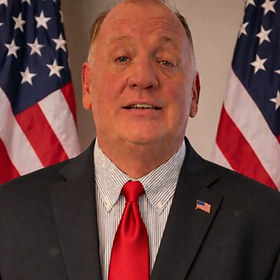
William Gehrkens — Research Lead and Inventor, Florida Keys Life
William Gehrkens is the research lead and inventor. The initiative is submitted through Florida Keys Life, a sole proprietorship.
His interest in engineering and computing began early. His father, George R. Gehrkens, was an aeronautical engineer with North American Aviation and introduced William to computers and programming at a young age. Growing up around engineering, aviation and technical problem-solving helped shape a lifelong interest in how complex systems are designed, controlled and made accountable.
That perspective now informs his independent research into meaningful human oversight, authorization integrity and accountability as artificial intelligence systems become increasingly capable of autonomous action.
Patent pending. William Gehrkens is the inventor named in a U.S. provisional patent application relating to this research.
Follow research updates
Interested in occasional public updates about this research? Request updates directly by email. This website does not collect or store your email address.
07 / Independence
This website presents an independent research initiative. It does not represent a United Nations-approved initiative, a certification, a standards determination, a production assurance, or evidence of independent validation.
Descriptions on this page concern research objectives and intended areas of study. They should not be interpreted as claims of established effectiveness, security, reliability, compliance or deployment performance.